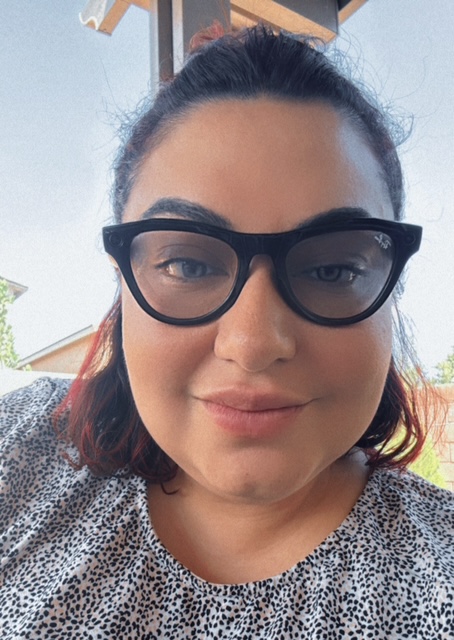
Author: Christy

  • Starting to feel the burnout

    So what do we do when we start feeling that imposter syndrome creeping up ? Despite our 10+ years in the field. Is it imposter syndrome? Is it just a loss of passion for the field we went into? Is it normal for this to happen? Or is this happening because I am facing a lot outside of work?

    This weird part of my life I would call it because my career is such a big part of my life.. this part is getting a little foggy feeling sloppy a little off track. Why?

    To try and make some sense of these feelings I began addressing things I ignored… things I ignored while I pursued my masters and my career. My health, my relationships, lastly my mental health. It all started from one day to the next it wasn’t gradual it was a call to action when I realized I started not wanting to show up to the job I worked so hard to get.

    I began therapy, I implemented recommended small changes a little light, a little SSP, listening to my body, taking things one at a time instead of allowing overwhelm to hit. What else? Oh yeah I got a tattoo because that’s also one thing that makes me feel better.

    So although I have no idea if these will all add up and combat the strange feelings at least I mustered up some energy to do something about my situation and that fact helps me feel a little less burnout and a little optimistic.


  • Cute RBT Youtube videos

    Video about “PAIRING” AKA building a relationship with your kiddo’s

  • FIRST DAY as a Behavior Technician 2015

    Back in 2015, I had my very first ABA session. Everything was done on paper—data collection, SOAP notes, and hours were logged on biweekly forms that I’d scan and submit to the BCBA owner. That was the system, and honestly, it felt like a lot at the time.

    Is This Just Like Babysitting?
    That’s what I thought at first.

    I drove nearly an hour and 20 minutes through typical Los Angeles traffic to a beautiful home tucked away in West Hollywood. I parked on the street, took a deep breath, and stepped into the world of in-home ABA therapy.

    Inside, I was greeted warmly by the child’s parents and my supervising BCBA. Thankfully, my BCBA took the lead during this first session and provided a comprehensive overview: the client’s strengths, behavioral challenges, reinforcers, communication style—you name it. Honestly, it was a lot to take in. Those three hours felt like the longest and most mentally exhausting of my life.

    Our focus that day wasn’t on teaching or correcting behavior. It was on pairing—establishing trust and connection with the client. His older sibling and both parents were coming in and out of the bedroom during the session, which added to the unpredictability. I remember heading to the backyard, playing in the sandbox, trying to keep the interaction light and pressure-free.

    At first, the child kept his distance and didn’t respond to social praise. But slowly, I noticed subtle changes—less space between us, increased spontaneous eye contact. It wasn’t dramatic, but it was progress. Real, measurable progress.

    By the end of the session, I said goodbye to the parents and their son. It wasn’t just babysitting. It was the beginning of something more meaningful—building a relationship that could help shape this child’s future.

  • Breaking the Silence: Creating a Safe Space for ABA provider stories

    If you’d asked me at 20 where I thought I’d be in life, I definitely wouldn’t have guessed “here”—a bit of a “ghetto” in terms of expectations, but hey, here I am. And you know what? I’m actually kind of grateful for where I ended up, because it’s led me to a realization that I never thought I’d come to: the need for an open, judgment-free space for people in the ABA community to share their stories.

    Anyone who’s worked in this field knows how tight-knit and sometimes closed-off it can feel. We’re expected to fit a certain mold, and there’s an invisible pressure to always have it together, to always be the expert. But let’s be real—nobody has it all figured out. And yet, because of the nature of our work, many of us feel we can’t express our challenges, doubts, or even the moments when we mess up. It’s like there’s a silent agreement to keep things perfect on the outside while quietly carrying the weight of our own struggles.

    That’s why I wanted to create a space where we can break down those barriers. A place where sharing isn’t about showcasing flawless success stories, but rather about being real. A space where you can speak openly without fear of shame or judgment. No more pretending. No more hiding. Just honesty.

    In this space, we can talk about the realities of being a BCBA, a RBT, a BT, a special education instructional aide or teacher—what’s hard, what’s exhausting, what’s confusing. Whether it’s dealing with burnout, navigating difficult cases, or simply trying to balance the demands of life and work, this is the place where you can share without worrying about how you’re being perceived. There’s no shame in not having all the answers, in facing challenges, or in feeling lost at times. We’re all learning and growing, and there’s strength in embracing that vulnerability.

    I believe that by coming together and sharing our stories, we can not only support one another but also begin to change the narrative around what it means to be a BCBA. It’s okay to be imperfect. It’s okay to need help. It’s okay to not always have everything figured out. We’re all just doing our best.

    So if you’re a behavior unicorn (or even just someone in a helping profession) who’s tired of pretending, come join the conversation. Let’s build a community where real stories are shared, and where everyone feels safe to just be themselves. No judgment. No shame. Just real talk.

    Not the creepy AI generated picture..

  • What They Don’t Teach You in Grad School: A BCBA’s Honest Reflection

    Howdy, I’m a BCBA based in Las Vegas (relocated during covid from CALI in 2020)—and if I’m being completely honest, I’m exhausted.
    Not just from the long hours, the notes, or the endless supervision paperwork, but from the emotional weight of this work.

    You see, I didn’t choose this field casually. I chose it because I care. I care deeply about the kids who often get overlooked, the ones who test your patience, the ones others write off. I chose this career because I believe every child deserves a chance to communicate, connect, and grow—and because I believe families deserve to be supported through that process, too.

    But here’s what they don’t tell you in grad school:
    How much the caring can wear on you.
    How isolating it can feel when you’re supposed to be the calm in everyone else’s storm.
    How sometimes, even with all your training and your data and your heart in the right place—you still feel like you’re barely holding it together.

    Somewhere between your unrestricted and restricted hours, between the mock FAs and the endless ethics scenarios, someone should’ve pulled you aside and said:
    “This job is going to crack you open. And that’s not a weakness. It’s part of the process.”

    No one warned us how much of ourselves we’d pour into this. But maybe that’s the point of a community—of our community. Maybe the next step for this field isn’t just refining our treatment plans and mastering our assessments. Maybe it’s creating safe spaces for real conversations. Where we’re not just BCBAs or supervisors or team leads—but humans. Humans who love, who care, who get tired, and who keep showing up anyway.

    So to the future of ABA:
    Let’s be honest with each other.
    Let’s share our stories without fear or shame.
    Let’s be the voice we wish we had when we started.

    Because even on the hardest days—especially on the hardest days—this work still matters. We still matter. And we’re not alone.

    Not CUTE and DONT Care !!